
Kenedy County VINE Coverage
Texas no longer directs new county registrations to the old VINELink service. Since September 1, 2025, the current channel has been Texas IVSS-Counties. It receives records from participating county agencies and supports a search for one person. Kenedy County has an unusual path because the Kenedy County Sheriff sends custody inquiries to the Kleberg County roster. The arresting agency and the agency holding the booking record may differ.
IVSS is a notification aid, not an official release instrument. It can reflect current custody or supervision data supplied by an agency, and updates may arrive throughout the day. A person who leaves custody may disappear from the search. Absence does not prove community release. It may reflect a transfer, delay, name mismatch, or record restriction. A lasting answer comes from the booking and release event held by the custodian, paired with the Kenedy County court record.
Search Kenedy County IVSS Records
Begin with enough detail to separate people who share a name. Texas IVSS-Counties accepts a full or partial name, DOC ID, state identification number, jail ID, or permanent booking number. The strongest match combines a name with an agency and record identifier. Do not rely on the first similar result.
- Open the current Texas IVSS-Counties search, not the superseded enrollment screen.
- Enter the full name or a known identifier. Use a partial name only when spelling may differ.
- Compare the participating agency, jail or booking number, and all identity details shown.
- Open the record and read the exact event label. Separate release, transfer, booking, escape, death, and court changes.
- Confirm a release with the custodian. Use the broader Kenedy County released inmate search if no current match appears.
The official county screen shows the fields used to start a match. View the current Texas IVSS source before comparing it with the captured interface.
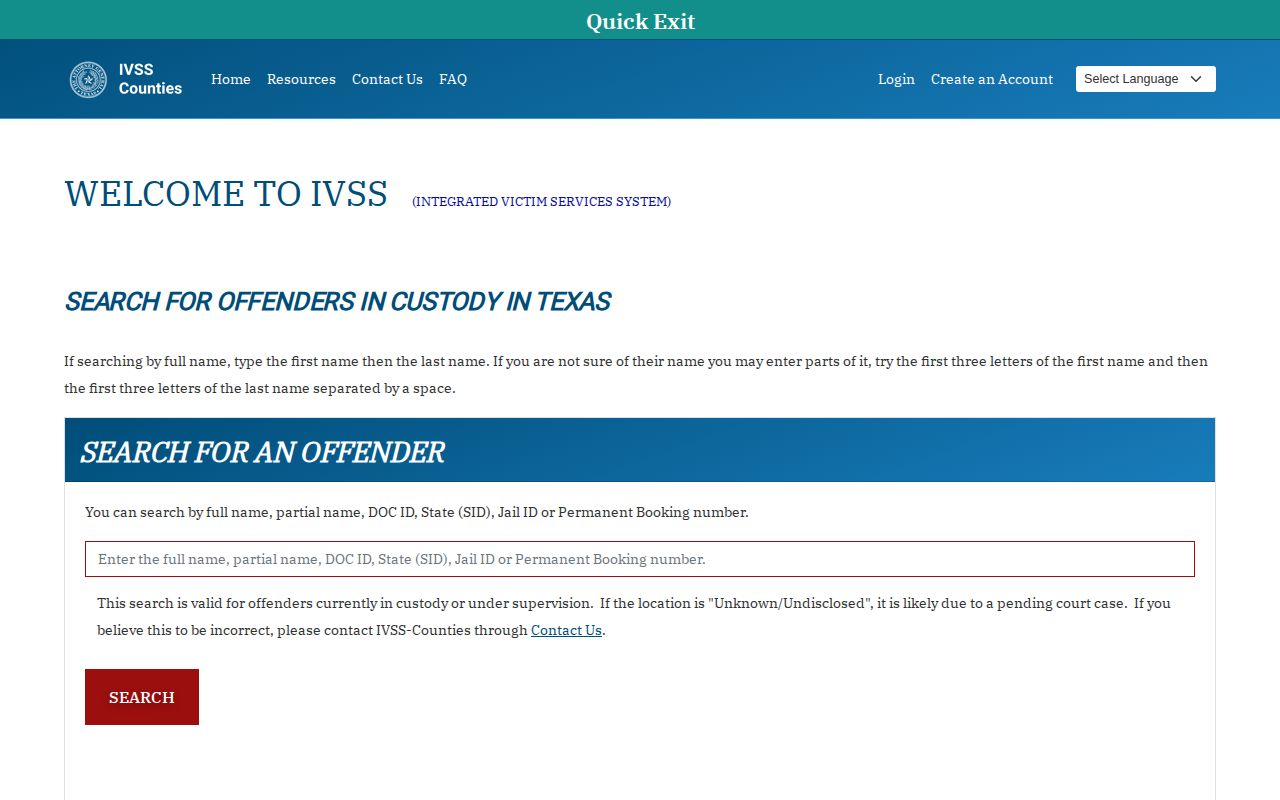
The screen starts a current person-specific check; it does not replace the jail's stored release entry.
Kenedy County IVSS Result Fields
The fields vary with the agency feed and event. Read each label literally. Current custody is a present-status clue. Release is an event notice that still needs agency confirmation. A projected date for a state prisoner is not an actual release timestamp.
| Field or event | What it can establish |
|---|---|
| Name and record ID | Helps distinguish the intended person from a similar name. |
| Participating agency | Identifies the source of the county notification record. |
| Custody or supervision | Reflects status received by IVSS, subject to update lag. |
| Booking or release event | Signals a change; verify its time and reason with the custodian. |
| Transfer event | Shows movement to another custodian, not freedom from custody. |
| Alert preferences | Records the delivery methods selected for future notices. |
A county alert cannot settle the court case. Bond release is conditional pretrial release. A dismissal, sentence, or later disposition comes from the Kenedy County clerk's case file. Likewise, a TDCJ transfer closes the county booking but begins a state-custody record. Match the event to the right system before drawing a conclusion.
Set Kenedy County Release Alerts
After selecting the right county record, IVSS may allow a request with or without an account. Offered delivery methods can include text, phone, or email. Complete every current confirmation or password prompt. Keep the agency and record number with the registration so a later notice can be checked fast.
- Open the matched record and select the notification option.
- Choose the events and delivery methods offered for that record.
- Enter the phone number or email address, then check it for errors.
- Finish the current confirmation process and retain the registration details.
- When an alert arrives, contact the custodian or locate its release entry before treating the event as final.
The Texas Office of the Attorney General says notices may cover booking, release, court-event changes, death, escape, and transfer to TDCJ. Availability depends on the participating system. For IVSS help or an offline participating jail, call 866-268-8959 at any time.
Three Kenedy Release Alert Channels
Kenedy County users may meet three products with similar terms but different functions. County IVSS is a person-specific search and alert channel for participating county records. The TDCJ IVSS portal is separate and covers state prison, parole, and mandatory-supervision records. Mandatory supervision is a Texas form of supervised release set by statute. A county registration does not create a state registration.
Kleberg also offers an Inmate Roster text subscription. It is a daily-as-needed digest of bookings and releases in the prior 24 hours, not an alert tied to one named person. It is prospective, not an archive. A reader tracking one person should use IVSS. Someone tracking the daily list may choose the Kleberg digest.
The provider change is shown on the official OAG source. Review the state transition notice with the captured page.
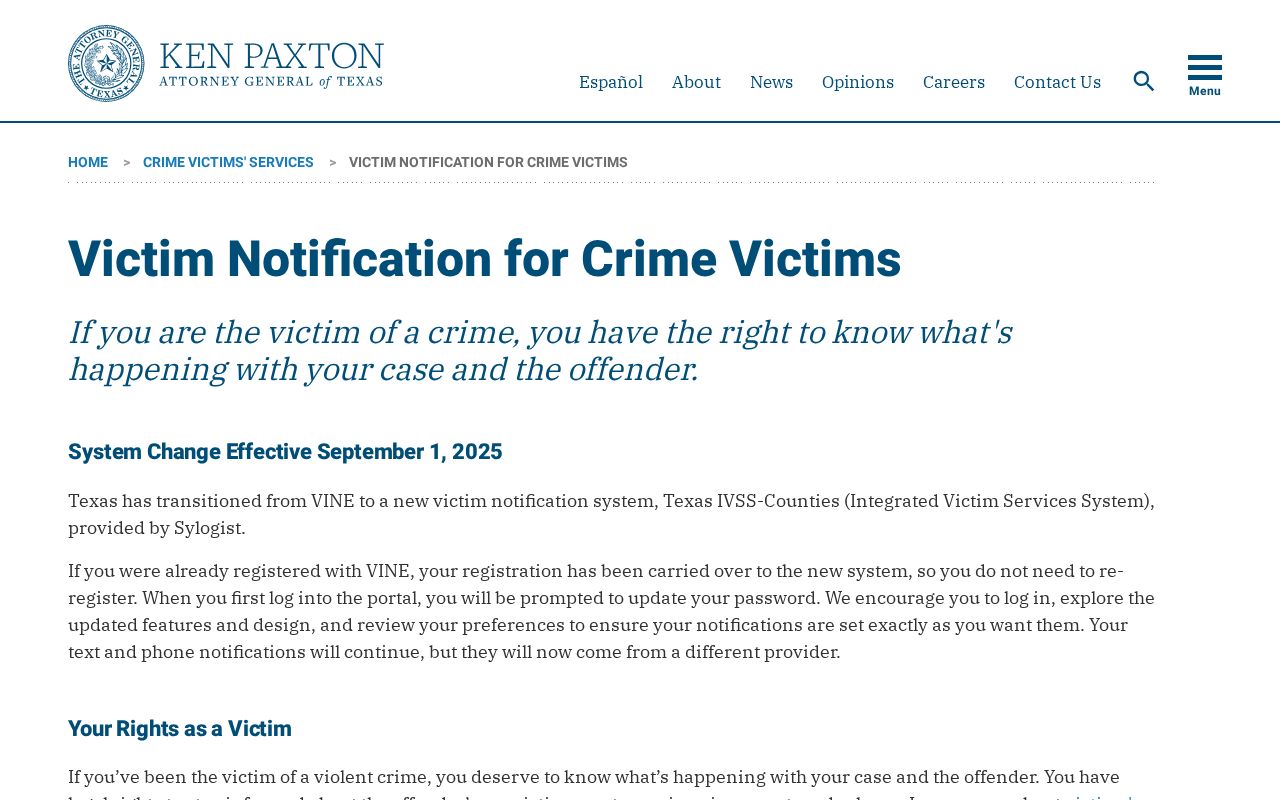
The notice explains why an old VINELink result should not be used for a new Texas county registration.
Legacy Kenedy VINELink PINs
Before the transition, county VINE enrollment could use phone, email, text, or TTY delivery. A registrant chose a four-digit PIN to confirm a phone notice or modify registration. The OAG migrated legacy registrations. This history explains searches for a VINELink PIN, but it does not mean the current IVSS interface requires the old PIN.
New registrations belong in Texas IVSS. If an old notice still arrives or a migrated registration is unclear, use current support and identify the agency, person, and old registration details. Do not place private contact or victim information in a public records request.
Confirm Kenedy County Release Alerts
Neither county nor TDCJ IVSS serves as the main federal custody record. For a federal case, use the BOP inmate locator. Immigration detention uses the separate ICE locator. A county transfer to either federal system is not community release. Ask for the receiving agency whenever the county booking ends as a transfer.
For a Kenedy arrest handled through Kleberg, detention staff and the booking/release record are the best sources for the exact jail exit. For a state prisoner, TDCJ information and Parole Division records establish state status. The TDCJ web search is limited to current inmates, so a discharged person may require a direct inmate-information request and court judgment.
A sound check uses identity, custody event, and legal outcome. Confirm the identifier. Obtain the custodian's time and release or transfer reason. Then use the Kenedy County case file for the bond order, dismissal, judgment, sentence, or discharge. This chain keeps an alert within the limits of the official records.
If the record belongs to a person held at the Kleberg County Detention Center, save the booking number and the time the alert was received. Call jail booking at 361-595-8500 extension 1251 and ask whether the person was released to the community or transferred. If staff confirms transfer, request the destination and transfer time. The receiving agency then becomes the next status source. For a bond event, the Kenedy County clerk can supply the order and later case disposition, while the jail supplies proof that processing ended.
A person who is already discharged may not remain searchable in a current notification portal. In that case, request a date-bounded booking and release record under the Texas Public Information Act. Include the full name, date of birth, arrest date range, Kenedy arresting agency, and known booking number. Ask for the release timestamp, reason, authority, and destination. For a former TDCJ prisoner, use TDCJ inmate-information request channels and the judgment because the public web locator is expressly limited to people now incarcerated.
Notifications are most useful when registered before the expected event. They are less useful as historical archives. A saved alert can document what IVSS reported and when, but it should be filed with the official response rather than cited alone. When the two differ, ask the originating agency to explain the event code or update timing. The agency record controls the custody history.